Finally. The guys (and girl) are back. Make no mistake about it, this is Urbandub's heaviest and dreamiest album at the same time, and probably their most cohesive effort since 2005's Embrace. They haven't been around since 2009's The Apparition, but it feels like they've been gone for longer.
Their last two albums, The Apparition and Under Southern Lights, no doubt won them a slew of new fans, but it didn't quite appeal to some of their older fans (me) - old both in fandom tenure and actual age. For some reason, those albums sort of left a bad taste in my mouth no amount of toothpaste could cleanse (insert dramatic sound clip here). Interestingly, both albums were recorded at Tracks studios in Manila with the same producer - Angee Rozul. I haven't quite penetrated the production fabric that snugly wraps Esoteric, but it's quite obvious they decided to record elsewhere this time around - my guess is in Tower of Doom studios, after lead singer Gabby Alipe's successful stint with Franco's 2010 self-titled debut album which was recorded in the same studio. Switching studios was what exactly this band needs.
That said, it seems we've honed in to what probably was the problem with their past two releases. Esoteric boasts a far superior guitar mix compared to The Apparition and USL. The vocal mix is more layered, adding a much-needed anthemic sound to their choruses, and the drums pack more punch.
But then I noticed something else was different with this band. One being Alipe's singing. The vocal arrangement is more refined here than in any other Urbandub record. A good example is the stanza and chorus of the album opener, "Stars Have Aligned", especially when Alipe sings the line "...god, a little pity just a little" (?), exuding playful wordplay and confidence in Alipe's ability as a now veteran vocalist for a band that's been around for more than a decade. Another is the album's first single, "Never Will I Forget", paints dream-pop bliss as Alipe coaxes listeners to "reminisce". I'm not a fan of the screamed "long time no see" part though - it's weird picturing two friends screaming "long time no see!" into each other's ears. That's just not how those things go down, in my mind at least.
Sonically, the album starts heavy, slows down in the middle, and ends heavy. The heavy songs do well to bookend this concise 10-track album, featuring some of the most down-tuned, dynamic, and crunchiest riffs this band has ever put on record that I won't be surprised if they used 7-string guitars on some of them. The slower songs are, I would say, standard Urbandub fare - the most notable being "When Love Is Not An Answer" featuring a simple, but hastily finger-plucked bass line over a slow but deliberate drum tempo. There's something special about it - and the same can be said about the rest of the tracks. Definitely give this album a listen. You won't regret it.
Pros:
- This is as heavy and dynamic as Urbandub can get
- Dreamy
It's been a couple of weeks since the release of "Soul Adventurer", and it still hasn't loosened its grip on a lot of people's ears (I know mine are still hooked). Yes, it's that awesome of an album it deserves another post in this blog. There are certainly a lot of areas the review failed to cover, something that has become apparent after numerous "tweaks" since it was published. This post aims to address all the pent-up compulsions once and for all.
As already stated, it's been several weeks, and any person who has consistently listened to the same album over and over will surely notice the bells and whistles, quirks, and the occasional dud. Speaking of duds, I have the same opinion of Razor since day one, that is - it's quite underwhelming considering it's surrounded by tracks that are above-average at the very least. This one is just plain average, reminiscent of the craft work of one Dave Grohl and company in the Foo Fighters' "One By One" album where most songs seem bored with themselves. It's a one off.
Then there's the overuse of "jah" in lieu of the more conventional "the" in the chorus of Uprising. One or two strategically placed jahs would have sufficed, any more seems like taking the rasta vibe a bit too seriously. Well, the song actually goes all-out rasta by the end so I guess all the left-handed passing of the doobie (or dutchie, or kouchie) was warranted.
Also, what's up with A Prayer? Was the line "then it just hit me" a conscious stylistic decision or a gaping deficiency in subject-verb agreement?
Nitpicking aside, yes, this is still quite the amazing album. Songs like Renewal have slowly risen from the rubble to become one of the top tracks, at first disguising itself as a mellow track with the signature reggae up-stroke over a rare Franco falsetto (a first), but halfway through, listeners are shown subtle signs of riffage that eventually explode into one of the heaviest, swirling riffs this album has to offer - all over the squeals of the lead guitar on wah. This particular section of the album is just pure zoned-out unadulterated rock paradise - something I always knew someone like Reyes is capable of with eyes closed. It's pretty hard to put on paper, but you can definitely feel it while listening to the song (go do it now if you haven't).
Blame is practically the musical representation of red wine, vastly improved after more than ten years since it first debuted as a "Frank!" song. Since its inception, the verses have been reprogrammed to sound starker than the original, giving off a sense of urgency over the original's slightly whiny grunge melancholy. Despite the changes, the chorus is fine untouched. It's as effective and catchy as it was, and could go down as one of the best choruses in the album, if not in Reyes' entire catalog. Hefty claims, yes. And it certainly gives Across The Milky Way a run for its money.
It's astonishing that no other Filipino rock musician could step up to the musical plate the way Reyes does, and it's been a long wait before he showed up. Sure, there are the greats and some others who have the potential, but they are nowhere near the same level of polish and sophistication as Reyes musically. He may not be a chart-topper like the Eraserheads once were, but he has already achieved what most musicians, including the Eraserheads, could only dream of.
Do you know of any Filipino musicians that could give Franco a run for his money? Post them in the comments.
Soul Adventurer is Franco Reyes' second major label release, unfortunately without most of the original Franco line-up that made the eponymous album in 2010 (I honestly don't care really). When the isolated corners of the internet were abuzz that production for Soul Adventurer was underway, I would hear Reyes played all the instruments in the record himself, with the exception of drums - which was done by Janjan Mendoza (ex-Franco / Urbandub drummer).
As production continued, he eventually recruited his long-time bandmate from Cebu, Paul Cañada (The Frank), to fill in the vacant ranks and to play guitar on some tracks. What tracks, I've no clue. This video suggests Cañada's guitar is present in "Renewal", but we won't know for sure until we see the liner notes of the album (still to be released on February 25, 2013 at the time of this writing).
This album contains 12 tracks - well, there are exactly 17 tracks, but 5 of which are outros and little snippets. Right off the bat, the first track "To Survive" has "Janjan Mendoza" written all over it. If any of you have heard any recent Urbandub album, you'll learn Mendoza is quite the drum&bass connoisseur. Unfortunately, while he's one of the better hard-hitting Pinoy rock drummers today, his love for drum&bass is mostly at the expense of his strengths. Which leads us to the lowest point of this song (and this album, in fact) - the first stanza. Subpar, almost sloppy, drum&bass drumming strewn across 16 bars is a shame. Luckily this will be the first and last time anyone's going to hear this kind of drumming in this album. It almost ruined an otherwise really good album opener, to be honest, but the rest of the track more than makes up for it. Overall, the song is straightforward "Franco Rock", as most of you have come to know, with a crunchy and blazing middle eight. Reyes laments in the chorus, "We'll pick up all the pieces to survive; We'll learn from our mistakes to make it magical", as if to acknowledge the falling out of the original Franco line-up.
The early part of "Moonset" has a very strong Queens of the Stone Age vibe to it, but eventually settles into familiar Franco territory. The most notable part being when Reyes sings "I'll be fine... alone(?)" over an almost dream-like rhythm section. It drives me nuts when he sings the last word of that line down to F#3 but never goes further down to F3 - which is probably how most singers would bookend that section of the song. Reyes is different. He just lets F#3 ring out and I was half expecting him to go down to F3 the entire time. The first time I heard it, I was floored and thought it was genius.
"Better Days" is one of the first tracks I've heard from the album (thanks to some Youtube videos). It makes no reservations and jumps into a reggae beat right after a hard intro, proclaiming "Come hear jah sound; Spreading good vibrations all over this town". Positivity abound. It's Herbal Midikishan - as Reyes would put it. He is no stranger to reggae and his love for the genre oozes in this song. The transitions between the reggae beat to hard rock is slightly off-putting at first, but I got used to it. This song also has one of the coolest outros you'll ever hear.
One of the stand-out tracks for me is "Across The Milky Way", a slow-paced hard rock number reminscent of 90's grunge. It's a bit faster than Soundgarden's "Black Hole Sun", but it delivers more or less the same punch. It's gritty, introspective, and quite high as a kite. I would not be surprised if this track became an anthem for future drinking (and other similar) sessions. There's nothing like being in the mountains with friends, beer in hand, with this track blaring on the stereo. Ahhh..... For all you corporate zombies out there, this track is a good reminder to take a break every now and then.
This guy.
Rock aside, Reyes dabbles with electronica in "Lover's Fire", a delectable amalgamation of soul and trip-hop music layered with hushed vocals. I welcomed the departure from rock with open arms. This guy. What can't he do? Unfortunately, this track highlights the production woes of this album, particularly how muffled and poor-sounding the drums are in the other tracks - particularly the snare drum. It's such a shame the digitally programmed drum track in this song sounds more organic than the actual drums used by Mendoza on this album.
"Blame" is apparently one of Reyes' older songs with his then-band The Frank in their Drink, Drama, Dream LP. Likewise, "Muse" is a re-hash of an old song by a now-defunct Cebuano band called Capsule. I'm not really sure how Reyes fits into the picture - maybe he helped write this song, or maybe he loved this song so much he had to cover it. Which brings me to a realization - some tracks on this album were probably written way before production began. And it's probably not just those two. Who knows? I'm not complaining by the way. If I had a huge back catalog before I hit it big, I'd slowly release it one song after another. That will keep the record label busy and leave me free to write new songs without ever being pressured by deadlines. That's the way to go.
Anyway, getting into the technical side of things for a bit, what this album clearly does better than the debut is the guitar
sound. The latter had one of the most constipated-sounding, beefy, stacked-pork-chops-meaty guitar
mixes I've heard from any band in recent memory, and thankfully it's
gone in Soul Adventurer, replaced by a much leaner and cleaner sound.
With the kind of material Reyes is writing, I've always thought three
guitarists was redundant, and pretty much overkill, in my opinion. So I'm really glad it's back down to two.
Verdict
Overall a bit more down-tempo and cleaner than the debut album, and apart from the somewhat muffled sound of the snare drum and that little DnB annoyance in "To Survive", this album is quite easily another solid outing by Franco Reyes. If any of you people are looking to hear some solid rock tunes, and I mean rock songs that actually rock, then it's impossible to go wrong with this guy. Go grab this album. Now.
9 out of 10
Cutting to the chase - this is one of the best rock albums I've heard in a long time. Just to be nitpicky, I'd say the music is "post-grunge", with a very strong 90s vibe to it, particularly reminiscent of old Stone Temple Pilots, with a singer that sounds a bit like Chris Cornell, though he doesn't use his nasal cavity as much as Chris does, therefore better.
I'm talking about Myles Kennedy. Yep, that's a name you've probably heard before. Singer-extraordinaire of Alter Bridge. You know, that band with the ex-Creed members. (Correction: ex-ex-Creed members.) "Blackbird" was actually the first album that got me hooked with Alter Bridge, and after realizing how much of a good singer Myles is, I decided to check out some of his old stuff since most people seem to talk about it a lot. So here we are.
This wasn't the first M4 album I've heard. Heard "The Fallout" first, and while it had its merits, particularly Myles' heavily-influenced Jeff Buckley singing, it wasn't until I heard "Second Skin" before I was compelled to dig up this blog and hastily write something about them.
The Mayfield Four
This album is surprisingly accessible, for a band that struggled to break into the mainstream during the turn of the millenium. I love the musicianship found here, and as a sort of a musician myself, you could tell after listening to a few songs that it came easy for them. The chemistry is undeniable, and all tracks blend in perfectly with each other. You'd be surprised you couldn't find one filler or out-of-place song anywhere. It's absolutely a gem from start to finish. It flows perfectly, barely changing gears or pace, just a constant assault of good old (post) grungy rock, until it slows down to climax into the magnificent end track "Summergirl" - a song that perfectly demonstrates just how high Myles' voice can soar.
It's sad to hear they've already broken up. I actually "sort of" prefer M4 over AB. And this album over AB's "Blackbird". Wait... I take that back. It's a hard choice. Blackbird is a bit beefier and much more deliberate, while Second Skin had musicians that I felt were a bit more relaxed and musically in-tune with each other, churning out a much more effortless piece of music. And it shows.
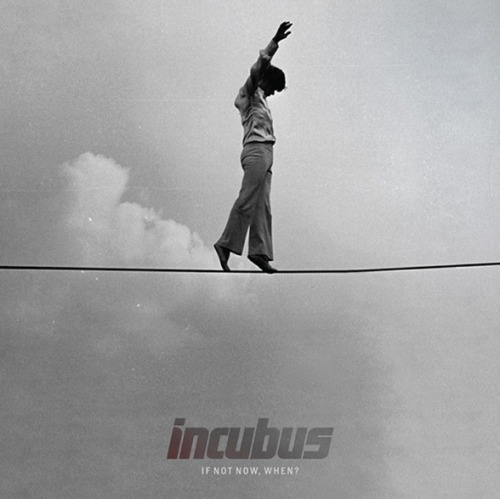
So the new album leaked. Great news for rabid fans, but unfortunately sad, sad news for the band. If Not Now, When? is still set for a July 12th release, a mighty long-ass time away, which makes the album 3 months premature. I imagine they would have done a couple more things in preparation for the release in July, perhaps a second single, the unveiling of the album cover, but this just screws everything up. (Update: the album has since been released at this point)
Anyway, I'm kind of torn up with the new record. On the one hand, I thoroughly enjoyed listening to the album. On the other, I'm confused about what exactly this band wants to be. The album is sunny. It's poppy. It's pleasant. It's minimalist. It's dreamy. I was able to conjure up all sorts of vivid imagery in my head whilst listening to it. And most importantly, I feel a sense of honesty emanating from the music. That's what I got from my first listen, and if that's not why I listen to music in the first place, I don't know why I bother listening. This is all quite premature really, so let me say that I'm reluctant about writing all these praises as I go about this review. I could very well regret this in the coming weeks, but what the hey - I'll just hit myself in the head in another post for being such an impressionable fool.
As for the band, Brandon's singing is much more relaxed here, and in effect - less annoying. Glad to see him using the lower register of his voice more frequently in the album. Also the rhythm section sounds more focused and fused in this one, with barely any instrument rising above the others. Mike's minimalistic use of the guitar is splendid. Ben, who's the most technically proficient in the group, is good as always. It's good Jose ditched the high treble sound of his drums. But the biggest props go to Mr. Kilmore, the once-upon-a-time Incubus DJ who has grown to become a pretty proficient keyboardist.
If you have been following this band like I have, you'd know its most scathing critics are its own fans. The general sentiment is that Incubus used to rock. The "we need another SCIENCE" crowd, hopeful that each news of an upcoming album will bring back the days of dreadlocks and baggy pants. Sad to say, this fan demographic has been consistently let down with each release after S.C.I.E.N.C.E. (I feel like an idiot putting all those dots just to preserve canon). There's also a certain number of fans for each release, and they always get upset with succeeding albums. Everytime. But the band doesn't seem to care.
L-R: Ben Kenney, Jose Pasillas II, Chris Kilmore, Mike Einziger, Brandon Boyd. Photo taken from Spin.com
This album isn't any different. In fact, the 'alienation' this band seems to be really good at is even worse here. They've completely lost their identity in this album. Some probably won't mind it, but no doubt most fans will definitely be frowning this tremendous shift in sound. The band may have written good songs, and its longevity remains to be seen if people won't get sick of the album in the coming weeks, but yes --- whatever made Incubus uniquely Incubus is nowhere to be found here. This literally sounds like a different band. To me it feels like they're still battling with their own identity as a band after all these years, from their shift from funk to nu-metal to alternative, etc. Most bands would have settled, but this band doesn't seem to run out of gas. Whether it's a good or bad thing, I have a strong feeling they've become a band grown accustomed to self-loathing, eventually finding whatever reasons to hate their own work after a short span of time - hence the famous "we hate making the same record twice" comments from the band members. I'm not really sure of those allegations to be honest - the masochism and whatnot. Perhaps it is just artistry at work and the need for artists to have some leeway or 'wiggle room', but in this band's case, the room is a freaking gymnasium. Seriously, I think this band needs some kind of consistency, at least for the sake of keeping their remaining fan base in familiar territory. They need to sit still for a couple of records lest they want their fans' heads spun out in utter confusion.
Overall, and regardless how this conflicts this band's background, I think it's a good Incubus album. And if you want to enjoy it, listen to it for what it is, not what you think this band is. (And listen to it with a decent pair of earphones.)
May 2010 marked the release of Stone Temple Pilot's brand new eponymous album, and it comes almost 10 years after their last effort, Shangri-La Dee Da, which I'm still not fond of to this day. And the fact that I haven't listened to an STP album in one sitting in a very long time doesn't bode well to any kind of "benchmarking" I was hoping to employ for this album. But hey, it's been ten years- nay, almost ten years, and I'm sure they've grown out of their little pajamas and likewise I can say the same for their music- that any kind of "benchmarking" would be futile.
Obviously enough, this is a different band. The edginess that was once prevalent in STP records is noticably missing here... well, there are traces of it from some of the tracks (i.e. Between the Lines), but it's clear they're opting for a more straightforward rock 'n roll sound, almost like cowboy rock 'n roll (if there's such a thing).
Anyway, when I'm listening to this album, this comes to mind:
Vvrrmmm!
A cadillac. (And for some reason a disco ball). I'm ridin' down the Hollywood strip with my huge aviators on. And while I'm at it I'm wearing either a leather jacket or one of those driving scarfs those posh drivers like to wrap around their dirty old necks. I'm headed to Las Vegas, and once I'm there, I keep my aviatored-eyes on the road, seemingly oblivious to all the neon lights that crowd the streets (I've never been to either Hollywood or Vegas, by the way). I light a cigarette, keepin' it real like nobody's business, seen?
If you can't daydream about being said douchebag making his way from Hollywood to Vegas while listening to this album, then you must be listening to it wrong.
I feel I'm not qualified to comment on Kjwan since I barely keep the band in my consciousness. For one, I've only heard one or two songs from their 2nd album, 2StepMarv. And having listened to Kjwan's self-titled debut, I can't accurately say anything about the change in sound evident in 13 Seconds to Love. If anything, however, it was for the better.
The album's name is supposedly inspired by the words of some producer from Malaysia that "he can tell whether a song is going to be a hit within the first 13 seconds". A hit, of course, is a song that is palatable to (or has the potential of being devoured by) the masses. I'll give that Malaysian dude the benefit of the doubt. Maybe he can tell that a song's going to be a hit if it does backflips in the first 13 seconds. But what does it say about Kjwan- the guys who made the 13-second thing a template for writing this album? Hit-seekers, to put it accurately. Not inherently a bad thing, but it is sort of limiting isn't it?
The band then chose love as the album's central theme, and there you have it- a supposedly clever album title that can easily be confused with 30 Seconds to Mars. Anyway, true to its word, the album is indeed full of songs about love- not the stereotypical "love songs" per se, or anything as cheesy. But that's to be expected from most of Kjwan's music.
I've always known them to be a band that unabashedly flaunts a dominant overdriven lead guitar, but this time around the guitars actually get comfy in the background, building up songs from the bottom up, at the same sonic level as the other instruments. This "effort in restraint" actually pays off, resulting to stronger songs that remain focused on their individual 'feels', as opposed to employing a jack-in-the-box style of guitar playing to keep the listeners interested. There is the exception in What About Us however, which showcases orgasmic and cacophonic guitar work as if to say they haven't forgotten their guitar chops.
An old picture of the band as a complete 5-piece.
(L-R): J-Hoon Balbuena, Boogie Romero,
Kelly Mangahas, Marc Abaya, Jorel Corpus
There's also a new dynamic of extending sections of a song, oftentimes into climactic crescendos, usually towards the end. It's both good and bad. Good because it sometimes contributes to the overall feel of the song, occasionally saving it from mediocrity, and bad because it's all too common throughout the album, not to mention these prolonged sections sometimes go on for too long. At some points, the drums comes to the rescue and spices up these prolonged sections to keep things interesting. At others, it adds to the annoyance of repetition. Nevertheless, J-Hoon Balbuena's drumming is good and experimental, oftentimes coasting near the edge of overdoing it. However, the drums themselves sound too 'treble-ish' for my taste.
The lyrics are plain and simple, and I have nothing to say about it. Vocal duties are now divided between Mr. Marc Abaya and Mr. Boogie Romero.
Marc Abaya hasn't changed, still singing in his signature hushed voice. He tends to sing the last word of a line by 'sliding' his voice down though- which I find annoying (a thing I cannot accurately put into words but I'll just point you to the stanzas of Lifeline).
Boogie Romero on the other hand, is a surprise. He's got a small singing voice, that of a little shy kid. It would really help if he loosens up a bit, belting the words out without having to worry about letting too much saliva out (or phlegm).
Kelly Mangahas plays the bass in such a way that you'll remember the songs by its bass lines. Really great performance from the guy that I might consider giving this album to him.
The album was recorded in Kerplunk Studios in Manila I heard, and so far this is one of the better rock productions in the Philippines I've heard these days in terms of sound quality. I can totally see recommending the studio to other bands, Urbandub most especially.
It's hard to believe Franco Reyes' existence in Cebu's music scene goes a long way back, but I was never really that fond of his early releases with his then-band Frank!. I do remember first seeing them performing covers- that day me and my brother decided to see a random concert, and with luck, caught one headlined by Frank. They performed a complete set, what songs- I'm not sure, but if my memory serves me right, I think they played STP's Piece of Pie and a solo acoustic version of Plush. I remember turning to my brother and saying, "this guy's got a really good voice". Frankbecame permanently etched on my 'good band' radar after that gig, and they were just that- nothing to get excited over, really.
Within a span of several years, theyhad apparently released an album with little fanfare from me--- well, my feelings were the same for most (if not all) local musicians. I never really 'drooled' over local music so to speak, not believing local acts would ever create any 'noteworthy' original tunes. My expectations were low, and always only limited to good cover songs of the music that I do love, if I'm lucky. Nothing more nothing less
Frank with Janjan Mendoza drumming for Czar Delos Santos.
(L-R): Ritze Arriba, Janjan Mendoza, Paul Cañada, Franco Reyes
That mindset would change after the release of Urbandub's Influence (also reviewed by this site). By that time, Frankhave since disbanded, only reuniting every once in awhile if Mr. Franco was in the country and available. I would later hear that he moved to St. Petersburg (USA) around the mid 00's, continuing to write music and forming a new band in InYo- with Mike Sylvia (drums), Tommy Jamin (bass),and Anton Cortes (guitars). In 2007 or 2008, I would hear these new songs, which Franco called 'demos', on his Myspace and Imeem page. With the help of some nifty audio-ripping software, I was able to further drool over the tracks without having to be in front of a computer.
InYo (L-R): Anton Cortes, Franco Reyes, Tommy Jamin, Mike Sylvia
I believe it was in 2009 that Franco came home and startedjamming with Gabby and Janjan of Urbandub, Buwi of Parokya ni Edgar,and 8 of Queso- and so started Franco. They would ultimately re-record most of the'Inyo tracks' with 3 new additions:
Seasons, arguably one of the faster tracks on the record with obvious influences from 311 during the breaks, is a great opener. It's convenient to consider it a love song- especially when taken out of context, but given its position in the album, it's an obvious invitation to the listener (...I'll wait for you to be a part of me and I of you...), and together "forever spin in love".
Last Waltz seems to suggest the momentary longing of good memories that lasted, a lost love perhaps, in a stupor (...will you hear my ailing words, will you be my everything?...) and the subsequent battle of the mind to quash the daydreams (...it's clear as sober- to me you're just a fairytale...), only to long for it again (...count to three, you're stuck with me forever...). The irony (and brilliance) of this song is that the 'waltz' never 'lasts'.
For My Dearly Departed is a solo acoustic track played over the sound of the gentle surf, left as they were from the last chants of "We Are" in This Gathering, closing the album with a hush, and singing the listener to sleep.
The album cover.
Despite the quality of the songs, there are a few things that need to be addressed. The biggest problem in particular is the songs themselves which are basically just carbon copies of their original InYo versions (with the exception of the 3 songs mentioned above). With the prior knowledge of InYo, it's almost impossible not to pit both releases against each other. Both concerned parties may be in agreement with the recording of this album- but credit has to be given, and through the eyes of the listeners- through my eyes, it should be given to Franco Reyes and the rest of the members of InYo, not the members of Franco. Seems they're conscious about their decisions seeing they named their band "Franco" in the first place.
But really, the whole picture takes on a new shape considering the 3 new songs. They're just so good that they are somehow enough to give this album its own identity, not just some downgraded version of the original.
I would also have to say that the production values that went into the recording of InYo (US production) and Franco (PHILS production) vary greatly. Though the tracks in the latter are more fleshed out and revitalized (since the band had ample time to further improve and tweak them), the audio quality still can't compare to the excellent production the InYo tracks got. Of course that would be the case. Recording studios in the Philippines have always had that major quality hiccup.
There's also the case of overdoing digital editing in some songs- most noticable in ones with quick "silent pauses" (Seasons- 1:04 to 1:16, A Mass...- 2:12 onwards). Why bands opt to digitally clip these "silent pauses" instead of just doing it live/manually? I don't know. It only gives an awkward synthetic feel to a song, and damn them if they think they're fooling anybody into thinking it was all done "live". Nevertheless, if they insisted on doing it, they should've made it so that it wasn't too obvious.
Lastly, one can also notice that the drumming is down a notch. Maybe it's directly related to the production woes or the fact that Janjan had to keep up with "already written" material, and it doesn't help he had to emulate someone who went to Berklee to learn his chops.
Despite these complaints, this album remains strong. At its core is great songwriting, and I'd go as far as recommending its quality from start to finish. It's about time the masses finally get a chance to hear one of the best Filipino rock singers to ever come out of the woodwork- who, by the way, not only sings with a convincing American tongue, but also sounds really good. It's safe to say Franco Reyes is definitely on a league of his own. You do not want to miss this album.
About two months ago, I attended a little concert dubbed Juan Tukar in a school here in Cebu (why it took me two months to write about it, I don't know). This band was “headlining” the concert (intentionally putting that in quotes since I believe bands that HEADLINE should play complete sets of 10 to 15 songs, whilst they only played a disappointing 5 songs). The show opened with 3-song performances from 5 or 6 bands that, as far as quality goes, were horrific (I'm talking about high school kids who sounded like they picked up their instruments yesterday). Tickets were free, so no big deal, thanks to my girlfriend. But it bothers me that people never really got their money's worth, only seeing a very short set from Urbandub, with an added bonus of painfully novice bands no one would ever pay to see.
Urbandub (L-R): John Dinopol (guitars), Jerros Dolino (ex-drummer), Gabby
Alipe (vocals, guitar), Lalay Lim (bass). Jerros Dolino played drums in the album.
Regardless, it was still a good night. The early parts were comedic, the last part- serious business. But this isn’t about the show per se. This story actually happened a few days before the show. Technically, I was a fan of the band, but after hearing their recent releases, I thought they had lost me. But, yes, I used to adore them. I even made a fansite which somehow grew and became their pseudo-official website for a brief period until I stopped updating (though I’ve recently delegated updating responsibilities to another person). I honestly did not “feel” their music anymore and eventually gave up on them.
Now, I cannot understand how I was able to “give up” on a band that immensely inspired and captivated me at some point. Most people would say that it is logical and often normal to “fall out of love” with a band because tastes are ever-changing, and I do believe that to a certain degree, but do tastes really change? Did my taste change? Maybe only when we are dishonest to begin with? Was I dishonest? With those questions in mind, I redownloaded their past albums, specifically Influence (2003), to see for myself. Did I change?
Naaah. And young as I was (maybe 7 to 8 years younger) I knew I was listening to a great record. Listening to it again makes me feel like it is probably the best OPM (Original Pinoy Music) album, and the guys at PULP magazine seem to agree, ranking it #4 in its “greatest local albums list” (link to follow). I still could not understand how quick I was to give up on this band!
The cover art of Urbandub’s 2nd album, Influence.
I enjoyed Embrace (2005) a fair bit, making me feel unneeded angst at my age thanks to its more in-your-face brand of music, but the change in sound in Under Southern Lights (2007) put me off completely, though lately I’m slowly beginning to appreciate it. The new albums do have one thing in common- they seem desperate for attention, in a “look at me! look at me!” kind of way. And I believe that’s essentially what makes them sub par.
Influence is exactly the opposite. This is an album for the underdogs, and much of its appeal stems from it. It was also appropriately produced during the years when the band was still itself an underdog. The song Versus accurately encapsulates the state of the band at the time (...standing on the back line but now I'm way ahead, couldn't believe it...). That was when Manila was still figuring out if they should accept this little band from Cebu with open arms. And open arms, they did.
Urbandub's current line-up (L-R): John Dinopol, Gabby Alipe, Janjan Mendoza, Lalay Lim
The album is not technically complicated compared to their later albums- which I think is largely due to the change of drummers. Nevertheless, complexity is and was never a sure-fire guarantee to quality. Only the best musicians get away with it. But for most it's all a gimmick really - a chance to showcase and 'shine'. It's that lingering undisciplined feeding-of-the-ego that haunts all musicians, big and small, denying the people what could have been 'great music'. Most of Urbandub's later albums suffer from it, slightly at the least. On the other hand, Influence feels content just being what it is, simple and not looking to impress, uncaring/nonchalant, and it emerges victorious without needing to perform.